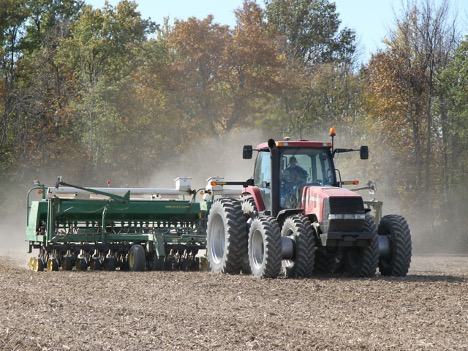
Fall is upon us here in Sampson County. Recent dry weather has allowed for tobacco and corn harvest to move along smoothly and quickly. Some of the double crop soybeans have taken a hit due to the dry weather during bloom and pod fill. The combine will tell the tale as soon as those soybeans begin to mature. As we all know, agriculture never stops. It is already time to start thinking about winter rotational crops and for many that means small grains and wheat particularly. Wheat prices are not terrible; they have been higher though. A good wheat crop could provide some much-needed income going into next year. Other small grains like oats and rye are common in Sampson County and some of the following recommendations apply also. Here are a few recommendations to ensure your wheat crop has the best chance of success.
For wheat, the optimum time to plant is late October through Thanksgiving. After Thanksgiving, your yields could take a hit. I believe that since most of the corn crop is out of the field, or will be by late October, planting on time is achievable. NC State recommends a population of around 2 million seeds per acre. This number should go up if you are planting after Thanksgiving. Also use a fungicidal seed treatment to prevent seedling diseases. After planting, it is important to begin scouting early to get ahead of any weeds or insects. Scouting remains essential throughout the growing season to catch problems before they become big problems.
Now that we have gone over timing, lets discuss some ways to avoid risk with what you plant. It is recommended by NC State to plant multiple varieties and maturities. This helps to mitigate weather and pest related pressure. For help in selecting suitable varieties, look at NC OVT data. You can find varieties that are solid performers across the state and varieties that fare well in this area.
Once you pick your varieties, the next concern is fertility. It is always a good idea to take soil samples and check the levels of P and K and your soil pH before planting and make any adjustments you need. Nitrogen rates can vary according to the yield you want to achieve. For top yield (90-110+ bu/ac) you may need to apply 120-150lbs of N per acre depending on soil type. NC State recommends applying a split rate, around 30lbs as a starter to encourage tiller production and then the rest at topdress to encourage grain fill. Splitting the rate minimizes losses due to leaching especially if we have a wet winter season.
Weeds are sure to come as they do each year and getting ahead of them will prevent them from impacting yields. Residual herbicides play a major role in full season control, help the crop get established, and help mitigate resistance. Some common herbicides used as a pre-emergent are Zidua, Valor and Anthem Flex. These herbicides ensure a clean start to the growing season and prevent grassy weeds from taking over. These weeds are usually hard to control later in the season with post-emerge herbicides. Some common herbicides used as post-emergent are 2,4-D, Harmony, and Osprey. These herbicides generally provide good control on broadleaf weeds.
These are just a few general recommendations to start the growing season off strong. Being proactive at planting could help to increase yields in the spring. As is the case with most crops, a good even stand will give your crop the best chance to produce the best results. I hope these tips help you as we go into the fall and winter growing seasons.