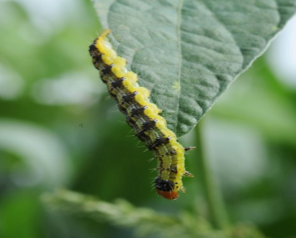
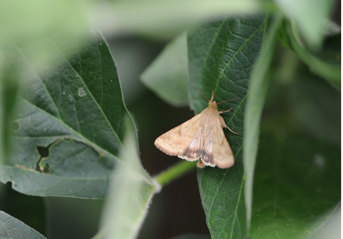
Whether you call it corn earworm, soybean pod worm, or cotton bollworm, the caterpillar life stage of this insect is the most serious insect pest of North Carolina soybeans. Soybean field infestation normally occurs in later July and into August, following several build-up generations in other crops. Moths emerging from corn fields from July into August can become serious pests in soybean, cotton, peanut, sorghum, and other crops as a new food source. This is often the time period when soybeans are flowering and beginning pod set, leading to potential yield loss from earworm feeding.
There is also a September moth flight and very late planted soybeans are sometimes susceptible for egg laying and caterpillar survival during the late flight. Yearly fluctuations in populations may be great, with high populations often occurring in seasons of early warm and dry weather like we have had this year. The July / August moth flight is monitored throughout North Carolina each year and presented in extension reports as corn earworm or bollworm moth trap catches. I observed a sharp increase in earworm numbers in my blacklight trap here in Sampson County during the last week of July, indicating a moth flight. These flights often occur around the full moon phase. You can view up-to-date data on corn earworm and other insects being tracked at the NC State Trap Data website.
This information can be very helpful when deciding to scout soybeans. North Carolina State University also has an economic threshold calculator to help growers decide whether or not they should treat their soybeans based on current input prices and grain prices. In general, soybeans can tolerate 3x more feeding during flowering than at pod set, so treatment is often best at pod set if there is a population observed above threshold.
For more information about earworm scouting, management, thresholds, and treatment, please contact your local extension office at 910-592-7161.