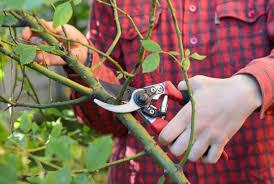
For gardeners and homeowners in Sampson County the cold days of January and February aren't conductive to working outside. Orders for seeds should have already been placed, and you're itching to find something to do. Well, find one of the warmer days during these months and get outside and start pruning.
Pruning is the horticultural practice of selectively removing specific parts of a plant, such as branches, buds, or roots. The primary goals of pruning include improving the plant’s overall health, controlling its shape and size, promoting fruit or flower production, and enhancing it aesthetic appeal. Pruning is done for various reasons, depending on the type of plant and its growth characteristics. If you haven’t pruned before or are unsure of what to prune, here are some general tips that will help you with this task.- Use the right tools: Hand pruners, loppers, shears, pruning saws, pole saws and chain saws are tools of the trade. Each one has a specific purpose and if used properly, should do the job without making you exhausted. Make sure that your tools are sharp, oiled, and cleaned. I can list several examples where people didn’t clean their tools from the previous fall and contracted poison ivy from the oils and debris left on the blades the following spring. Rusted blades leave jagged cuts and rusted pivot points may leave you feeling like you just finished a hard workout at the gym.
- Know when to prune: Different plants have different pruning requirements. Research the specific plant you are dealing with to determine the best time to prune. Sampson County Extension has developed a pruning calendar for our area and has publications on pruning specific plants.
- Remember the 3D’s, Dead, diseased, and damaged: You can prune dead, diseased, or damaged parts of plants at any time without risk of injury to the plant. This helps improve the plant’s health and appearance.
- Thin overcrowded growth: Remove old, weak, and crossing branches to allow more sunlight and air circulation within the plant. This can prevent disease and promote better growth.
- Shape the plant to its natural form: One-size pruning doesn’t fit all. Plants should be pruned according to their natural form or desired aesthetic. Crape myrtles should never be topped, and shrubs should be pruned narrower at the top and not in a round shape.
- Encourage fruit and flower production: Prune to encourage the development of fruiting wood or more flowers. Spring flowering plants should be pruned immediately after flowering. You should never prune the terminal ends of apples and pears because that is where the buds are set for fruit production.
- Sterilize tools: Before moving from plant to plant, sterilize your tools with disinfectant spray or 90% alcohol to prevent the spread of disease. If you have a disease in a specific plant, sterilize between each cut to prevent the spreading of the disease further.