Growing Fruit Trees in Sampson County: What You Need to Know
Fruit trees can be a valuable and rewarding addition to your home landscape, but they require proper planning and maintenance to thrive. So far in 2025, we’ve received numerous inquiries about fruit tree care, common problems, and the best varieties to plant in Sampson County. From home visits and photos, it’s clear that many homeowners need guidance.
The first question you should ask yourself is: How much time do I have to dedicate to fruit tree care?
Choosing the Right Tree for Your Time Commitment
Fruit trees vary in maintenance needs. Selecting varieties that match your available time can save you frustration down the road.- Low Maintenance: Figs, persimmons, red mulberries, pawpaws, walnuts, chestnuts, and pecans.
- Moderate Maintenance: Apples, pears, Asian pears, and plums.
- High Maintenance: Peaches and nectarines.
Selecting the Best Location
A successful fruit tree starts with choosing the right planting site. Keep these factors in mind:
✔ Water Access – Ensure trees are near a water source for easy irrigation.
✔ Good Drainage – Avoid low-lying areas where water collects.
✔ Sunlight – Trees need at least 8 hours of direct sunlight daily.
Soil & Nematode Testing: A Crucial Step
Before planting, test your soil and check for nematodes. Here’s how:- Soil Testing: Collect samples from two depths: 6-8 inches and 8-16 inches.
- Nematode Testing: These microscopic worms are common in Sampson County’s sandy soils and can kill fruit trees. A simple test can identify harmful levels.
Selecting Healthy Trees
When purchasing fruit trees, choose specimens that are 4-6 feet tall with healthy root systems. Avoid trees that are:
🚫 Stunted or poorly shaped
🚫 Diseased or injured
🚫 Infested with pests
Proper Planting Techniques
Follow these steps for successful planting:- Dig a hole twice as wide as the root ball but no deeper.
- Check for root girdling and prune circling roots before planting.
- Do NOT add fertilizer to the planting hole.
- Backfill with native soil and water thoroughly.
Fertilizing for Healthy Growth
- Established Trees: Apply fertilizer from the trunk to the drip line.
- Timing: Use a split application – half in late winter (Feb-March), the other half in May.
- Rate: If no soil test was done, apply 1 lb. of 10-10-10 fertilizer per year of tree age, up to a maximum of 10 lbs. per tree.
Pruning for Productivity
Regular pruning is essential for fruit production. Follow these guidelines:
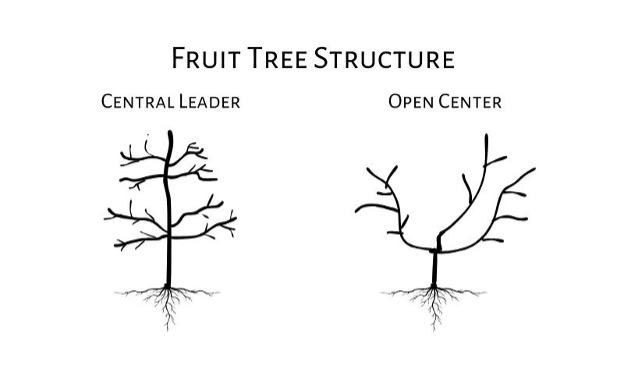
🌳 Central Leader Pruning – Pecan, pear, plum, and apple trees.
🌳 Open Center Pruning – Peach and nectarine trees.
Always remove:
✔ Dead, diseased, or damaged wood
✔ Crossing branches and water sprouts
✔ Limbs touching the ground or sagging below horizontal
Pest & Disease Management
Frequent observation is key to controlling pests. Follow a consistent spray schedule:- Dormant Season: Apply horticultural or dormant oil (2-3.5 oz per gallon) to control scale and other pests.
- Green Tip Stage: Use a complete fruit tree spray (1.5-2.5 tbsp per gallon) every 7 days until blossoms appear.
- During Bloom: DO NOT spray insecticides to protect pollinators.
- Post-Bloom to Pre-Harvest: Apply the complete fruit tree spray every 14-21 days up to three weeks before harvest.
For more information on fruit tree care, soil testing, or pest management, contact the Sampson County Master Gardener Plant Clinic at 910 592 7161.
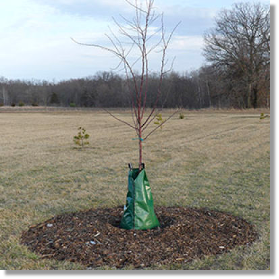
Properly planted fruit tree with tree watering bag.