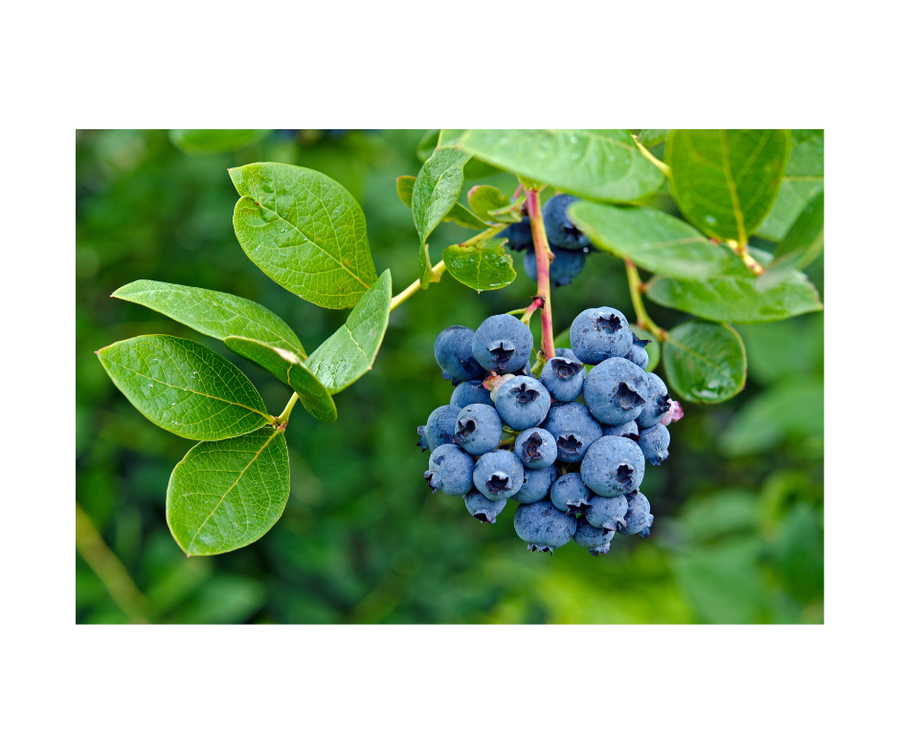
Blueberries are a popular landscape plant for homeowners in Sampson County. They are fairly easy to grow if provided the right conditions and are relatively low maintenance. One maintenance task that you don’t want to overlook is pruning. All blueberry varieties require annual pruning to manage bush height and shape. Pruning also prevents over-cropping, increases berry size, and removes dead, diseased or insect infested canes.
Most blueberry pruning is completed in the dormant season, typically between December and March for our area and can be completed in four steps.
Step One: Define the crown. Pruning starts at the ground and not at the top of the bush. Visualize a circle 12 to 18 inches in diameter around the crown of the bush and remove all shoots that have emerged outside of this circle.
Step Two: Remove low-angled canes and crossover branches. Low-angled canes can be contaminated by rain splashed soil splashing up on the fruit. Crossing branches shade out fruit and can rub on other branches causing damage to multiple branches.
Step Three: Open the center of the bush. If the bush is overgrown, you may need to remove 2-3 large canes from the center of the bush to reduce overcrowding, improve air circulation and allow more light penetration. Any canes that are over 3” in diameter, gray in color, or covered with fuzzy growth are prime candidates for removing from the center of the bush.
Step four: Thin and head back matchstick growth. As blueberry canes age, they become smaller and smaller in size that produce small size berries. Remove clumps of twiggy, brushy-looking, matchstick size lateral branches from main canes. This helps the bush put its energy toward making larger berries on new canes.