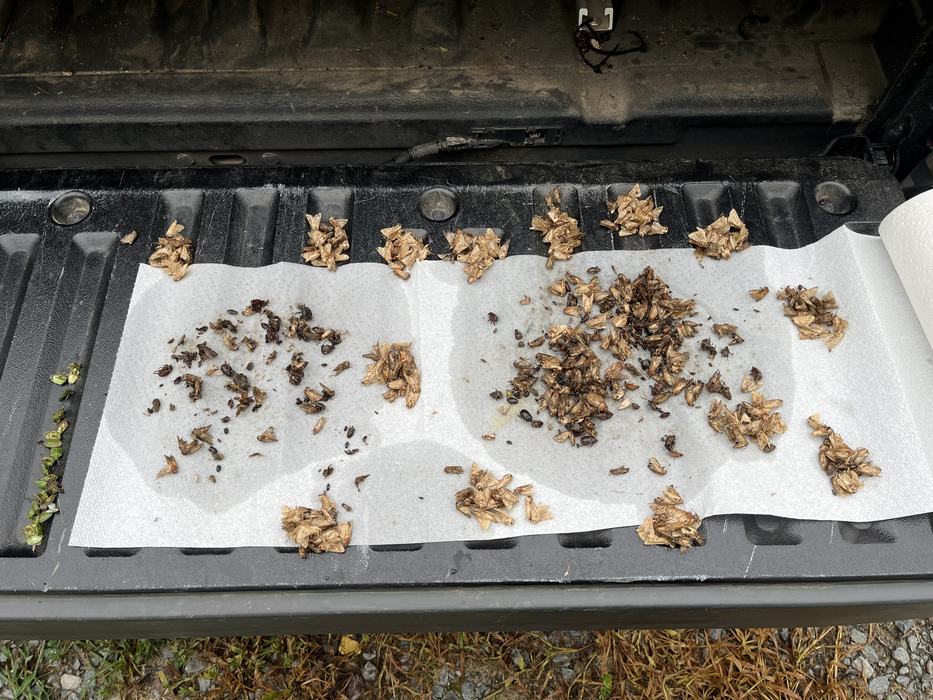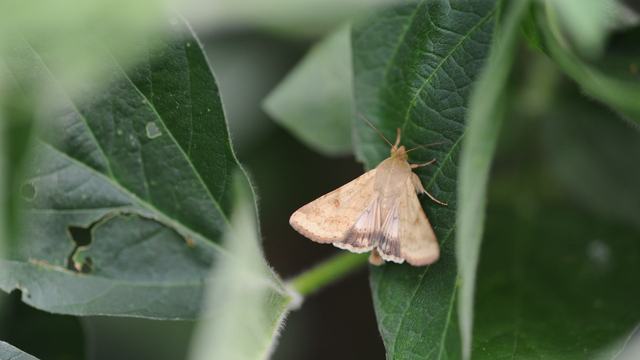
A recent surge in corn earworm moths has been captured in local light traps. This upsurge in moths signals the need for timely scouting in flowering and podding soybean fields to ensure populations remain below economic thresholds. While soybeans typically compensate for flower damage, drought stress may limit this ability. Prioritize monitoring for pod feeding, as it poses the greatest risk for yield loss.
Use the corn earworm threshold calculator to determine if fields are above the economic injury threshold and if an insecticide application is economical.
If an insecticide application is decided upon, avoid broad-spectrum options such as acephate and pyrethroids to minimize the impact on beneficial insects that keep other pests in check. Effective insecticides for corn earworm control in soybean include: Blackhawk, Denim, Intrepid Edge, Steward, and Vertento.
Likewise, cotton could be at risk this year due to the high numbers of moths captured. The decision to spray for cotton bollworms should be made by scouting fields, the treatment threshold is 4% damaged bolls.
If an insecticide spray is determined to be needed for cotton bollworms based on the damage threshold, again avoid broad-spectrum insecticides that may impact beneficial insects. Effective insecticides for cotton bollworms include: Vantacor, Steward, Intrepid Edge, and Blackhawk.
If you have any questions, please contact the Sampson County Extension Office at 910-592-7161.
Additional resources:
Corn Earworm (Soybean Podworm) - Soybeans | NC State Extension.
Corn Earworm in Flowering Soybeans
Bollworms - Cotton | NC State Extension
Bollworm Moth Activity Is High- Scout Cotton Before Damage Builds