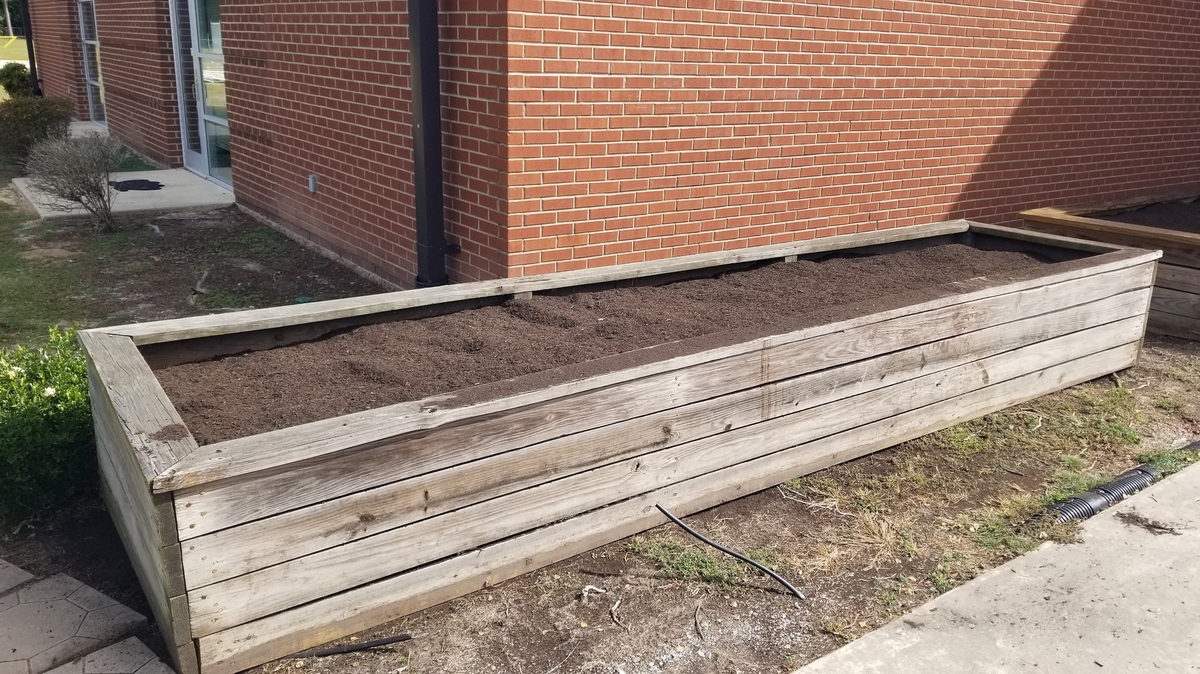
If you enjoy vegetable gardening, but have grown weary of all the bending, stooping, hand weeding, and crawling around on the ground, maybe it is time to think about building a raised bed. Raised beds offer other benefits other than less strenuous labor, such as better drainage, healthier root systems, warmer soil, and opportunities for season extension.
Raised beds are simple structures that are built and filled with soil to raise the elevation of the bed higher than the surrounding soil level. There are many materials that you can use to build raised beds. The most common is treated wood, but you can also use blocks, bricks, landscape timbers, old railroad ties, and containers. They can be constructed to fit your needs and your location.
Before building your beds, you should select a site that receives 8-10 hours of sunlight daily. Ensure the location is close to a water supply so you can supplement irrigation during dry periods. Place the beds close to the house, as studies have shown that the further away gardens or beds are from the home, the less likely they are to be tended.
NC State recommends building raised beds no more than 4 feet wide, so you can easily reach the middle of the beds. Beds can be built 1-3 feet high, and 4-16 feet long, depending on the materials available, and how much you want to invest in the project.
Once the frame is constructed, fill the first 6 inches of the bed with sand to help wick moisture away from the bottom of the root zone. Finish filling the bed with high quality soil medium, or compost.
To build a 4’x16’x30” bed you will need the following materials:
8 – 4’x4’x22.5” posts
8 – 2’x6’x46: ends
8 – 2’x6’x187” sides
8 – 2’x6’x16” inside bracing
2 – 2’x6’x16’ side caps
2 – 2’x6’x48” end caps
3-4 cubic yards of soil medium