The Autumnal Equinox arrived on Thursday, September 22, 2022 at 9:04 p.m. EDT in the United States. This event marked the first official day of fall for the year in the Northern Hemisphere and Spring in the Southern Hemisphere. During an equinox, the sun crosses over the celestial equator into the opposite hemisphere. After the autumnal equinox happens, days become shorter and the sun will continue to rise later and nightfall arrives earlier until the winter solstice.
Fall is an optimal time to plant many species of plants in the home landscape. The heat of summer begins to wane, and autumn’s cooler air temperatures are easier on both plants and gardeners. The soil will still hold enough warmth and moisture to allow roots to grow until the ground freezes. There are many great selections of trees, shrubs, bulbs, and perennials to pick from when thinking about fall landscaping that have wonderful textures, unique leaf colors, and shapes.
Spring-blooming bulbs such as tulips and hyacinths need a period of cold weather to bloom, which is why they should be planted in fall. Many bulbs come in a wide assortment of varieties, so you can choose bloom times, colors, and heights that work best in your landscape. Pansies and violas planted in the fall will get you two seasons of enjoyment. They will bloom before first frost, and again when the weather warms up in the spring. Trees and woody ornaments are best planted in fall. Keep newly planted trees and shrubs well-watered until the ground freezes so they get a good start before going into winter dormancy. Perennials can be planted or divided and replanted in fall. Keep any fall planted perennials watered on the same schedule as trees and shrubs. You can also mulch heavily if freezing weather is forecast.
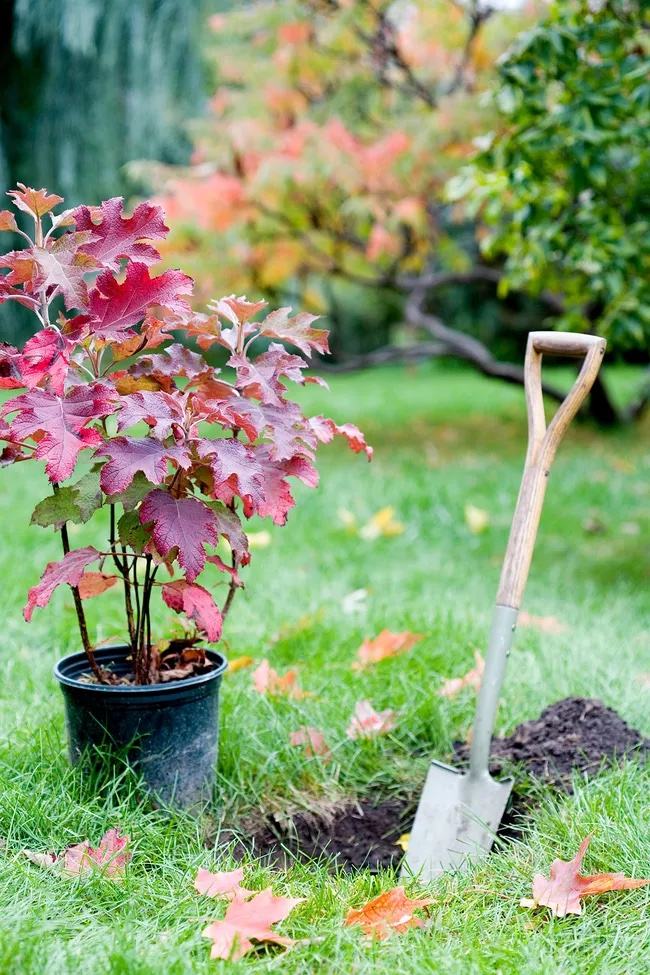
When planting in the fall, plant the right way. Dig the planting hole twice as wide as the root ball with gently sloping sides and no deeper than the root ball. Most plants that die within a few months of being planted do so because they were not planted properly or because they were not watered sufficiently. Planting too deep is the most common mistake made when planting any type of plants. Trees and shrubs that are planted too deep may die quickly or suffer for several seasons, but never thrive. Make sure to never plant any containerized plant deeper than the soil line of the container. Do not place any fertilizer in the planting hole and backfill with the native soil that came from the original hole. Gently tamp the soil around the root ball, water thoroughly, and mulch.
For more information on fall planting contact the Extension Master Gardeners℠ of Sampson County at 910 592 7161. You can also learn more online.