It is a busy time of the year for Sampson County farmers. Many are harvesting wheat, baling hay or straw, planting soybeans, setting out sweet potatoes, spraying tobacco, harvesting vegetables, applying gypsum to peanuts, hauling livestock, or fertilizing other crops. It makes me tired just to think about what our farmers are doing on a daily basis to ensure that the rest of us have a safe, healthy and abundant food supply. Our farmers use a variety of machines to get these jobs done. Tractors, sprayers, combines, cotton pickers, semi-trucks, grain carts, pull behind trailers, tanker trucks, converted school buses, loaders, and anything else needed to get the job done.
To get all these tasks done, farmers have to use our highway system to get from field to field, field to warehouse, and warehouse to market. According to the NCDOT, there are approximately 1,400 miles of primary and secondary rural roads in Sampson County, so the likelihood of encountering some type of agriculture machinery on the roadway is high.
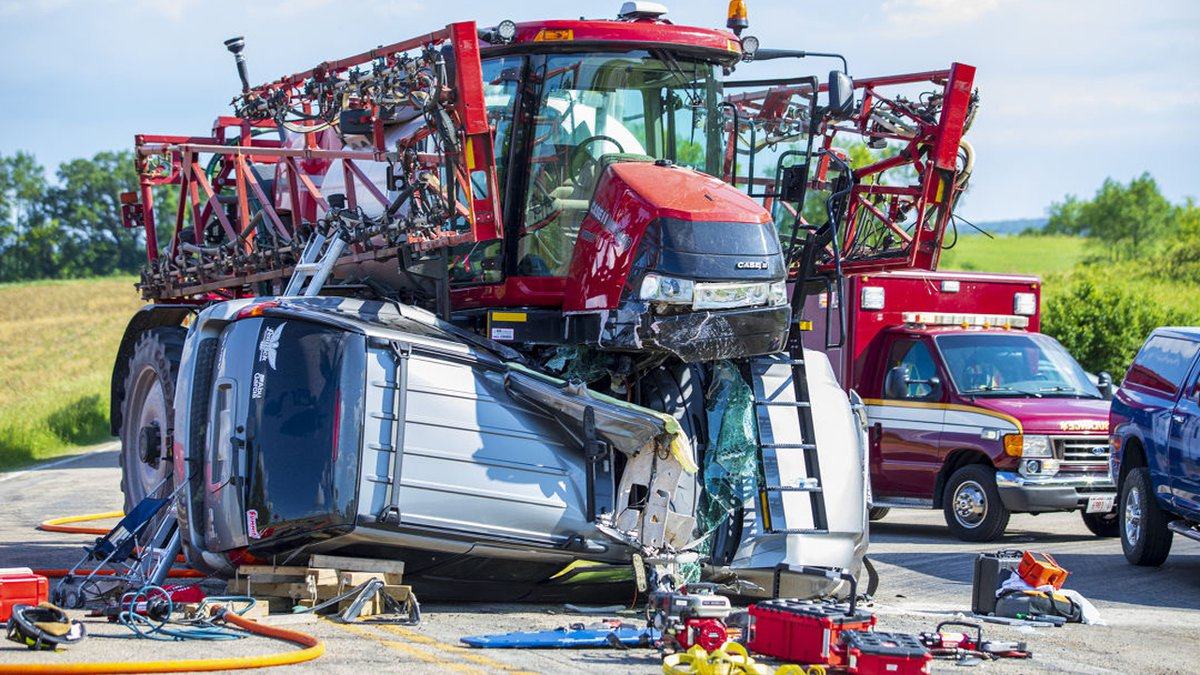
According to Farm Bureau of North Carolina, from 2015-2019 there were more than 1,000 accidents on North Carolina roads involving farm vehicles, tractors, and equipment. 33 of those occurred on highways in Sampson County, putting us in the top 5 North Carolina counties for farm vehicle accidents. Only a few of these accidents are single farm vehicle accidents. Most often, farm-related highway accidents involve a non-farm vehicle. In fact, 8 out of 10 accidents involve a non-farm vehicle. These accidents are not only extremely dangerous for farm equipment operators, but research has found they are deadly for non-farm vehicles. Research has found that fatalities are five times more likely in accidents involving farm vehicles. Factors that increase the incident rate of farm vehicle accidents include speed, left-hand turns, and distracted driving.
Many farm vehicles travel less than 25 miles per hours on roadways. When approaching a farm vehicle, many drivers don’t realize how fast they are closing on the equipment. A car traveling 60 miles per hour will close the gap the size of a football field in less than 5 seconds. That doesn’t give a driver much time to react when approaching farm equipment. When you first notice a farm vehicle in front of you, slow down.
Left turns are especially dangerous for farm vehicles. Left turns result in side swipes and angle crashes, which are the most common type of collision involving both farm and non-farm vehicles. These types of crashes typically occur while farm equipment is turning left and another vehicle attempts to pass. Farm machinery makes wide left turns, which makes it look like they are turning right or pulling off to allow following cars to pass. Don’t make this mistake. Never pass a farm vehicle unless you are absolutely certain it is safe to do so.
Distracted driving also contributes to farm vehicle related accidents. The average amount of time to answer a phone call, send a text, or glance at the caller ID lasts 5 seconds. At 60 miles per hour, that equates to over 120 yards. If you glance at your phone while overtaking a farm vehicle at 60 mph, it takes over 2 football fields to slow down enough to avoid a collision.
For farmers, you should verify that all your lights, flashers, and blinkers are working properly and use them each time you are traveling on the highway. Apply reflective tape to implements to improve visibility for motorists in low light situations. Be aware when traffic backs up and pull off in a safe area to allow traffic to pass.
By working together and sharing the road, we can all work together to help prevent farm vehicle crashes and possible deadly consequences.
For more information on farm highway safety, visit the Michigan State website.