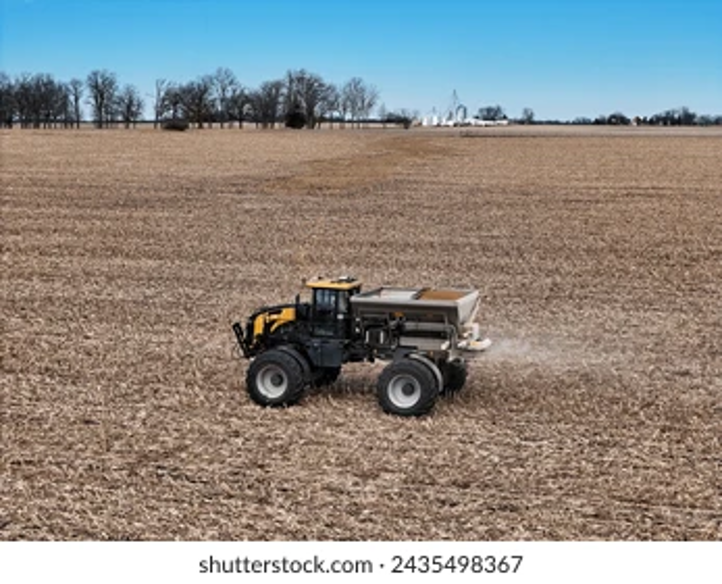
As the growing season gets underway in Sampson County, many farmers are applying fertilizers to help their crops reach their full potential. These fertilizers come in many forms and are applied in several ways. I’m sure everyone has seen spreader trucks on the roadways and have seen hog waste being pumped out onto a field. But have you ever wondered what happens to that fertilizer after it hits the soil? Understanding its path is key to using it efficiently and protecting our natural resources. This could also save you some money in the long run.
The primary reason we apply fertilizer is to feed our crops. Plants absorb nutrients through their roots, primarily in dissolved form. Nitrogen, phosphorus, and potassium are the “big three” macronutrients that play vital roles in plant growth. Without these nutrients, plant growth and development would not happen. Nitrogen is probably the most talked about nutrient. It helps build proteins and chlorophyll which are necessary for photosynthesis and therefore plant growth. Phosphorus supports root development and is a building block of DNA and RNA making it essential for cellular division. Potassium improves water uptake and transport throughout the plant and is involved in photosynthesis and starch production. As previously mentioned, there are different types of fertilizers and different forms but the best way to utilize all fertilizer is to ensure they are plant available. Ensure these nutrients become available in the root zone, where they’re taken up by the plant and put to work supporting yield and quality.
Unfortunately, not all fertilizer stays where we want it. Nitrogen particularly is prone to leaching through the soil profile and out of the root zone. This is more prevalent in sandy soils or after heavy rains, conditions we know very well here in eastern North Carolina, especially over the past couple of weeks. Phosphorus doesn’t leach as easily, but it can bind tightly to soil particles and move with erosion into ditches and streams. In both situations, that fertilizer is essentially lost and can’t be absorbed by the crop. Proper fertilizer timing, rate, and placement are critical. Tools like split applications, soil testing, and controlled-release products help ensure more nutrients go into the crop and not out of the field. Pumping plans are a good way to utilize hog waste and ensure that you don’t overapply.
The soil isn’t just dirt, it’s alive. A single teaspoon of healthy soil contains billions of microorganisms. These microscopic organisms are critical to the soil food web and play a central role in how fertilizer nutrients become available to plants. Soil microbes such as bacteria, fungi, and other organisms help transform nutrients into plant-available forms. Some microbes play a crucial role in nutrient cycling. Nitrogen cycling bacteria convert nitrogen sources into ammonium or nitrate forms that roots can absorb. Others help release phosphorus that’s tied up in soil minerals. Mycorrhizal fungi form symbiotic relationships with plant roots, improving access to nutrients and water uptake. Soils with strong microbial communities tend to have better structure, hold more moisture, support healthier root systems, and bounce back faster from stress.
Fertilizer is a valuable tool, but it's just one part of the system. By understanding how nutrients move through the soil: into plants, through microbes, and sometimes out of reach, we can make smarter decisions that boost productivity while protecting our environment. By managing for the soil life beneath our feet, we’re investing in long-term productivity and sustainability for Sampson County’s farms. A healthy soil microbiome doesn’t just improve fertilizer efficiency, it builds resilience into the whole cropping system. This can help farmers get through tough years and hopefully make a better return on their investments. For more information on nutrient management strategies for your farm, contact the Sampson County Cooperative Extension Office at (910)-592-7161.