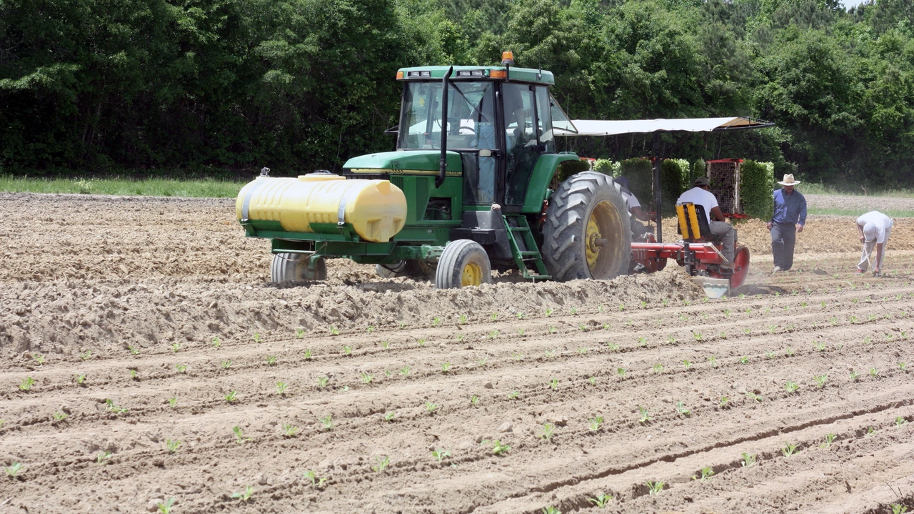
Spring means a lot of things to a lot of people. For farmers in Sampson County, it means it’s time to plant warm season crops. Corn has been going in the ground since late March and continues to be planted as temperatures rise. Tobacco is being set throughout Sampson County as well. Cotton and soybeans are the next crops to be planted as spring progresses. Here are a few things to consider going into the growing season.
For corn growers, the start of planting season is looking good. There have been a couple frosts that have damaged some corn but those are likely over. Temperatures are warming up and soil moisture is good. Rains have been consistent and there are more in the forecast. Corn growers must consider a good residual herbicide plan. Planting conditions are good and if they are suitable for corn emergence and growth, these conditions are conducive for weed growth also. Residual herbicides give you time for your crop to develop a canopy and outcompete weeds.
Tobacco is being set around the county. The greenhouse season was fairly uneventful which is definitely a good thing. There were a few instances of pythium and some issues with emergence from a particular seed lot, but this has become expected in the greenhouse season. I would ask growers to be wary of thrips. It has been warm lately so there is a risk for a thrips infestation. Hopefully the timely rains in the forecast will help to suppress them. For planting, I would suggest utilizing the Tobacco Thrips Flight and TSWV Intensity Predictor tool from NC State. This tool gives you the ability to input your field location and possible planting date to determine the risk of thrips and Tomato Spotted Wilt Virus incidence.
Cotton and soybeans will soon be planted. For both of these crops I will echo the importance of a good residual herbicide program to ensure a clean start that allows the crops to outpace emerging weeds. In cotton it is essential to get a good stand with over 70% germination. Timing of planting is the best way to ensure a good stand. Optimal moisture and temperature at planting and in the days following planting produce the best results. With rain in the forecast, moisture should be attainable, as long as it isn’t excessive. Temperatures appear to be going up also. I suggest watching the forecast closely and plant when there will be at least 50 DD60s accumulated within five days of planting. You can plant in marginal conditions if you must, but this could mean you won’t get optimal germination. Soybeans are like most other crops, achieving a good stand as quickly as possible gives you the best chance for success. I would say to give some thought to selecting a maturity group to ensure it fits your rotation and when you could harvest without risking grain quality issues.
Wheat is one crop that has been in the ground for a while and is just coming to maturity. This is a critical stage of development where the grain is beginning to fill the heads of the wheat. It is important at this stage to scout and monitor for any disease that may be present and any late season weeds that could impede harvest.
These are just a few things to keep in mind as we continue through planting season here in Sampson County. With good practices at planting and good weather conditions we should see an even stand, giving us the best chance to achieve good yield.